Custom artwork
Commissioning Art for Merch: Rights and Licensing Basics
Define the product, quantity, commercial use, credit, fees and deliverables in writing before commissioning artwork for merchandise.
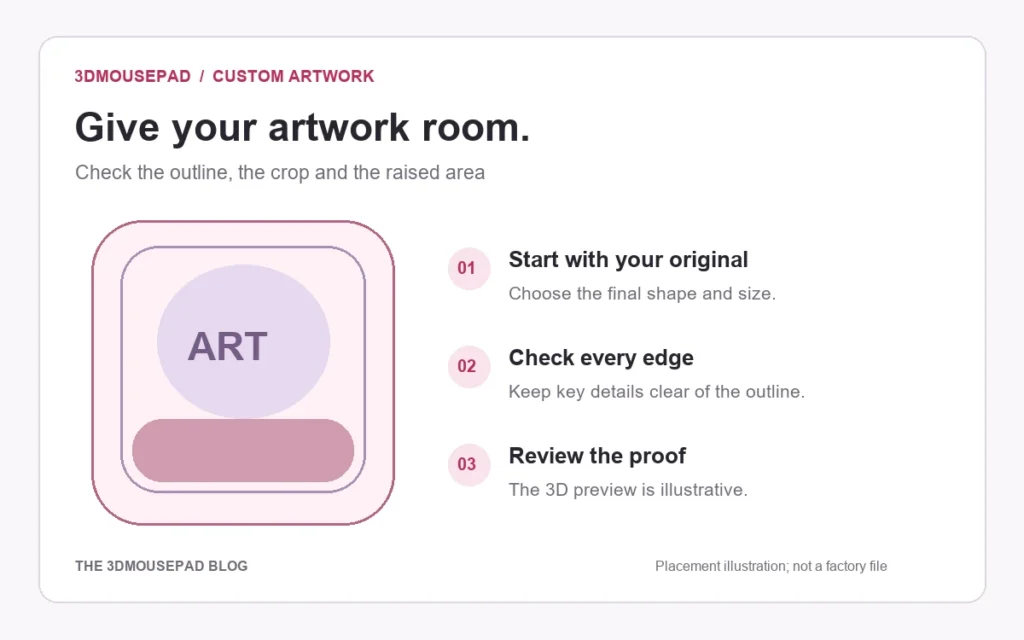
Before commissioning art for merchandise, agree on the intended use in plain language: what product will be made, how many units, whether any will be sold, where they may be sold and how the artist will be credited. Put the agreement in writing before the final artwork is delivered. This guide is a practical planning checklist, not legal advice, and local law or a complex business project may require advice from a qualified professional.
Separate personal use from commercial use
“Merch” can describe very different projects. One mousepad for your own desk, a gift for a friend, rewards for a small community and products offered for sale do not create the same expectations. Tell the artist which situation applies instead of asking for a vague “merch licence.”
For personal use, state the number and recipient. For commercial use, describe the products, estimated quantity, sales channels, countries, campaign duration and whether items may be reordered. If a plan changes, ask for an updated agreement before expanding the use.
The store’s terms of sale govern the order with the store, but they do not replace your agreement with the artist. You remain responsible for having permission to submit and reproduce the artwork.
Ask what the price includes
A commission price may cover the artist’s creative work and delivery of a finished image, while reproduction permission is priced or described separately. Ask whether the quote includes the intended merchandise use, how many products it covers and whether future reprints need another fee.
Also confirm the number of sketches, revision rounds and final formats. A licence does not solve a production problem if the delivered file is too small or flattened in a way that prevents layout changes. Conversely, receiving a layered file does not by itself grant permission for every use.
Make payment stages clear: deposit, sketch approval, final payment and delivery. Record what happens if the brief changes or the project is cancelled. These practical details reduce disagreement even when the commission is friendly and small.
Define the rights you actually need
List the actions the project requires. They may include printing the image on a mousepad, cropping it to a shaped outline, adding a background, using a small preview in a shop listing or showing the finished product on social media. Ask the artist to approve those actions rather than relying on a broad phrase that each person may interpret differently.
Clarify whether the permission is exclusive or non-exclusive. Most small projects do not need exclusivity, and requesting it can affect the price because it may restrict how the artist uses their own work. If exclusivity matters, define the product type, territory and duration instead of treating it as permanent and universal by default.
Discuss whether the permission can be transferred to a manufacturer solely to make the agreed product. The artist may allow production access while keeping all other rights. Keep the production file controlled and share it only with the services needed for the order.
Talk about credit and portfolio use
Agree on the credit line, artist name and link. Decide where credit will appear: product listing, packaging, event sign or social post. A physical product may have little room for text, so the agreement should not depend on an impractical placement.
The artist may also want to show the commission in a portfolio or process post. Set a date if the project is confidential before launch. If the product uses a surprise gift or an unreleased character design, say when the artist may share it.
Credit does not replace permission, and permission does not remove the value of credit. Treat both as explicit parts of the arrangement.
Choose a fee structure that matches the project
Common structures include a fixed fee for a defined quantity, a higher one-time commercial fee, a royalty on sales or a combination. No single structure is automatically fair for every project. The useful question is whether both parties understand how the amount is calculated and when it is paid.
If a royalty is used, define net or gross sales, deductions, reporting frequency, payment dates, refunds and how records can be checked. If a fixed quantity is licensed, define what counts as a unit and what happens to damaged production pieces. Do not invent a percentage because it appeared in an unrelated template.
For a one-off personal product, a short written permission may be enough. For a continuing commercial line, a more detailed agreement and professional advice can be worthwhile.
Check every ingredient in the artwork
Ask whether the final piece contains third-party fonts, stock textures, brushes with special restrictions, character bases, photographs or logos. The artist may own the illustration while a component has separate terms. Confirm that the planned merchandise use is allowed for each material.
Fan art needs extra caution. Permission from the commissioned artist does not grant rights held by the owner of an existing character, logo or series. If a project depends on protected third-party material, do not describe the artist’s approval as a complete merchandise licence.
Original characters also require clear authority. If several people co-created the character or an employer owns part of the design, identify who can approve reproduction before commissioning the product art.
Prepare production-ready deliverables
Give the artist the product shape, target size and safe-area guidance early. The custom artwork guide describes classic and full-body layouts and current upload requirements. A flexible composition needs extra background around important features so it can be cropped without cutting through them.
Ask for a full-resolution export in a suitable colour space and, when agreed, a layered source file. Keep text, subject and background separable if the crop may change. The artwork preparation guide explains Fill, Fit, effective resolution and proof review.
When the art and permission are ready, the custom studio lets you choose a shape, upload the file and test placement. The preview is not a legal clearance check. It is the customer’s responsibility to submit authorised material.
A plain-language agreement checklist
- Names and contact details of the client and artist.
- Clear description of the artwork and deliverables.
- Product types, quantity, sales channels, territory and duration.
- Personal or commercial use, plus any exclusivity.
- Permitted crop, colour, text and layout changes.
- Fee, royalty if any, payment stages and reporting.
- Credit wording and portfolio-sharing date.
- Revision process, cancellation terms and delivery formats.
- Statement about third-party materials and who clears them.
- Method for approving later products, reprints or scope changes.
A template can remind you of topics, but it should be edited to describe the actual project. If the wording is unclear or the financial stakes are meaningful, seek qualified legal advice in the relevant jurisdiction.
FAQ
Does paying for a commission mean I own the copyright?
Do not assume so. Ask the artist what ownership and permissions are included, and record the agreement in writing.
Can I turn personal-use art into products for sale later?
Only after confirming the expanded use with the artist and addressing any third-party rights. A new commercial agreement may be needed.
Is artist credit enough to sell merchandise?
No. Credit and permission are separate. Agree on both before production or sales.
Prepared by the 3DMousepad store team using our product specifications and published store guides. Product illustrations are not scale drawings. Check the product page for the current options, price and availability. Ask us about your setup or suggest a correction.
Keep exploring
Genshin Impact Desk Setup Ideas by Element
Use a Genshin Impact element as the palette, choose one hero piece and keep the rest of the desk practical, restrained and easy to reset.
Turn Your OC or Fursona Into Desk Merch
Prepare references, confirm reproduction rights and compose your OC or fursona for the product shape before approving a custom print.
Anime Desk Setup Ideas That Don’t Look Cluttered
Use one colour story, one hero piece and clear working zones to build an anime desk that feels personal without looking crowded.